

Blog
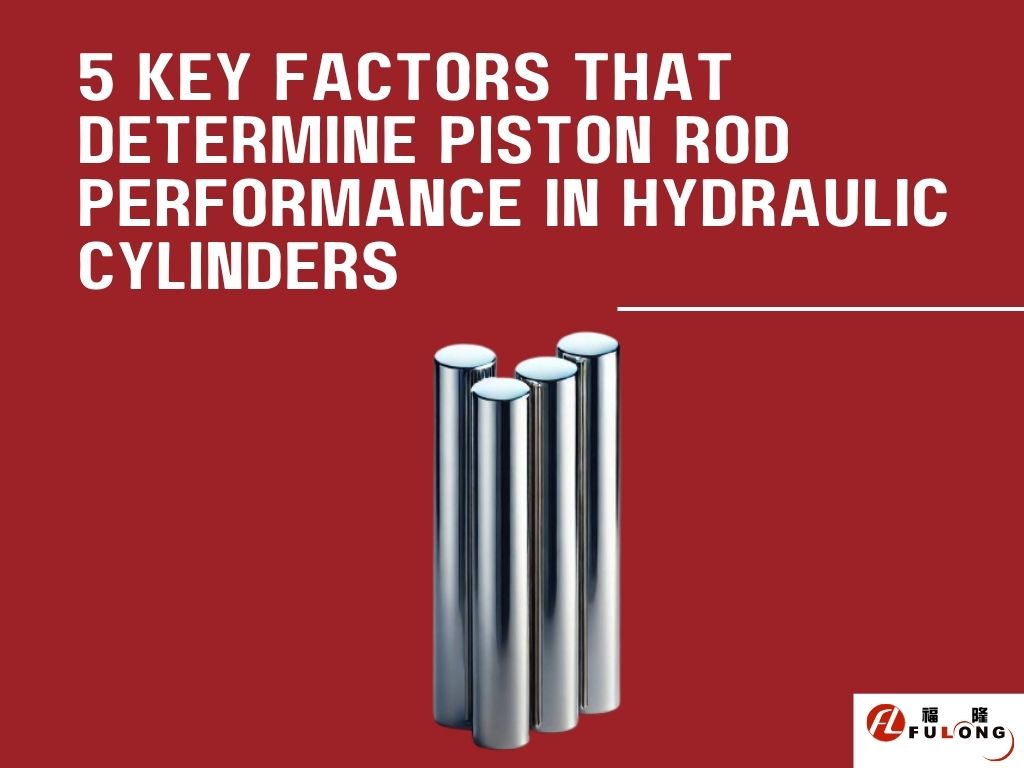
Why Piston Rod Performance Matters in Hydraulic Systems
In hydraulic cylinders, the piston rod is one of the most critical components responsible for converting hydraulic force into controlled mechanical motion. Whether used in construction machinery, agricultural equipment, mining systems, injection molding machines, or industrial automation equipment, the performance of the piston rod directly influences cylinder efficiency, sealing reliability, operational stability, and service life.
Although piston rods may appear to be simple cylindrical components, their long-term performance depends on a combination of material properties, surface engineering, manufacturing precision, and environmental durability. A piston rod that lacks sufficient strength or surface quality can accelerate seal wear, increase friction, cause leakage, and ultimately reduce the lifespan of the entire hydraulic system.
Fu-Long Metal Industrial Co., Ltd. has specialized in manufacturing precision piston rods, hard chrome plated steel bars, and hydraulic components for more than 40 years. Through extensive experience supporting hydraulic equipment manufacturers worldwide, Fu-Long understands that piston rod performance depends not only on material selection, but also on surface engineering, dimensional accuracy, and manufacturing quality.
For hydraulic equipment manufacturers, understanding the key factors that determine piston rod performance is essential when selecting components for demanding applications. The following five factors play a major role in ensuring long-term reliability, operational efficiency, and service life.
1. Material Strength and Core Mechanical Properties
The foundation of every high-performance piston rod begins with the base material.
Hydraulic cylinders are subjected to continuous loading and unloading cycles throughout their operating life. During extension and retraction, the piston rod must transfer force while maintaining dimensional stability and resisting deformation.
In heavy-duty applications such as excavators, mining equipment, lifting platforms, and industrial presses, piston rods may experience millions of load cycles over many years of service. For this reason, material selection involves much more than simply choosing a steel grade with adequate tensile strength. Engineers must evaluate fatigue resistance, toughness, impact resistance, machinability, and long-term structural stability.
Medium-carbon steels such as S45C and CK45 are widely used for piston rods because they provide a balanced combination of strength, toughness, and manufacturing efficiency. These materials can withstand demanding operating conditions while offering excellent compatibility with precision machining, grinding, and hard chrome plating processes.
For heavy-duty hydraulic applications that require higher strength and fatigue resistance, materials such as 20MnV6 and 38MnVS6 are also commonly used. These micro-alloyed steels provide enhanced mechanical properties and are frequently selected for construction machinery, mining equipment, lifting systems, and other demanding hydraulic applications.
For more demanding applications, manufacturers may further enhance performance through induction hardening or additional heat-treatment processes to improve fatigue strength, wear resistance, and load-bearing capability.
A piston rod manufactured from unsuitable material may initially perform adequately, but repeated loading can eventually lead to bending, permanent deformation, fatigue cracking, or premature failure. Therefore, selecting the right material is the first step toward achieving long-term hydraulic cylinder reliability.
2. Surface Hardness and Wear Resistance
Surface hardness is one of the most important factors affecting piston rod durability.
Inside a hydraulic cylinder, the piston rod continuously moves through seals, guide bushings, and bearing elements. This repeated sliding motion creates constant friction and mechanical contact. Even microscopic wear can gradually reduce sealing effectiveness and increase maintenance requirements.
Hard chrome plating has become the industry standard surface treatment because it provides an excellent combination of wear resistance, hardness, and corrosion protection.
A properly manufactured hard chrome plated piston rod typically offers:
-
High surface hardness
-
Excellent abrasion resistance
-
Reduced sliding wear
-
Improved scratch resistance
-
Extended service life
The hard chrome layer acts as a protective barrier that minimizes direct contact between the steel substrate and surrounding components. This helps maintain dimensional stability and reduces the risk of surface damage that could compromise sealing performance.
For applications involving shock loading, heavy side loads, or highly abrasive environments, induction hardened chrome bars may provide additional advantages. These products combine a hardened subsurface layer with a hard chrome plated exterior, improving both surface durability and resistance to subsurface fatigue damage.
Without sufficient surface hardness, piston rods may quickly develop scratches, scoring, and wear marks that accelerate seal deterioration and hydraulic leakage.
3. Surface Finish and Seal Compatibility
Many engineers focus on material strength and chrome thickness while overlooking the importance of surface finish. In reality, surface quality often has a greater influence on seal life than hardness alone.
The piston rod and hydraulic seals must work together as a system.
If the rod surface is too rough:
-
Seal wear increases
-
Friction rises
-
Leakage risk becomes higher
If the surface is excessively polished:
-
Lubrication retention may decrease
-
Long-term sealing performance can be affected
For optimal operation, piston rods require a carefully controlled surface finish that balances:
-
Low friction
-
Lubrication retention
-
Seal compatibility
-
Wear resistance
-
Smooth reciprocating motion
Precision grinding processes are typically performed after chrome plating to achieve the required surface roughness and consistency. This step is critical because even minor surface imperfections can create localized stress points that damage seals during operation.
Proper surface finish provides several benefits:
-
Reduced seal wear
-
Lower friction losses
-
Improved lubrication behavior
-
Better leakage prevention
-
Longer maintenance intervals
In many hydraulic systems, seal failures can often be traced back to inadequate piston rod surface quality rather than problems with the seal itself. This is why experienced manufacturers place significant emphasis on precision grinding and surface inspection throughout production.
4. Dimensional Accuracy and Straightness
Dimensional precision plays a vital role in hydraulic cylinder performance.
Even a piston rod manufactured from high-quality material and protected by a durable chrome layer can create operational problems if geometric tolerances are not properly controlled.
Critical dimensional characteristics include:
-
Diameter tolerance
-
Straightness
-
Roundness
-
Cylindricity
-
Concentricity
Hydraulic cylinders depend on precise alignment between the piston rod, seals, guide bushings, and cylinder tube. Small deviations in straightness or diameter can create uneven loading conditions that increase friction and accelerate component wear.
For example, poor straightness may cause side loading on seals and guide elements, leading to premature wear and unstable cylinder movement. Similarly, variations in diameter can affect sealing pressure and increase the risk of leakage.
In modern industrial automation systems, dimensional stability is even more important because positioning accuracy and repeatability directly influence overall equipment performance.
Manufacturers typically achieve tight tolerance classes such as f7 or h8 through precision centerless grinding and rigorous inspection procedures. Consistent dimensional control helps ensure:
-
Smooth cylinder operation
-
Stable sealing performance
-
Reduced vibration
-
Improved positioning accuracy
-
Longer component lifespan
5. Corrosion Resistance and Environmental Durability
Hydraulic cylinders often operate in challenging environments where moisture, dirt, chemicals, and contaminants are unavoidable.
Construction machinery may work in muddy and wet conditions. Agricultural equipment is exposed to fertilizers, pesticides, and outdoor weather. Mining machinery operates in abrasive and highly contaminated environments. In these situations, corrosion resistance becomes a critical factor in piston rod longevity.
Corrosion damage often begins as a small surface defect but can rapidly evolve into a serious maintenance issue. Once corrosion develops, seal lips may become damaged as they travel across the affected area.
This can result in:
-
Hydraulic leakage
-
Seal failure
-
Increased contamination ingress
-
Reduced system efficiency
-
Higher maintenance costs
Hard chrome plating provides an effective protective barrier against oxidation and environmental exposure.
Benefits include:
-
Improved corrosion resistance
-
Better outdoor durability
-
Reduced maintenance requirements
-
Enhanced surface protection
-
Longer service life
For especially demanding environments, additional surface treatments or specialized plating specifications may be used to further improve corrosion performance.
While corrosion resistance is sometimes overlooked during the design phase, it remains one of the most important contributors to long-term hydraulic cylinder reliability.
Common Materials Used for Hydraulic Piston Rods
Different piston rod materials are selected according to equipment requirements, operating conditions, and design objectives.
S45C and CK45 are commonly used for general hydraulic systems because they offer a practical balance of mechanical strength, machinability, and cost efficiency. These materials are suitable for a wide range of hydraulic cylinders used in industrial machinery and automation equipment.
When engineers design hydraulic systems for higher loads or more demanding operating conditions, material selection may shift toward higher-performance grades such as 20MnV6 and 38MnVS6. The final choice often depends on factors such as working pressure, load characteristics, stroke length, operating environment, and expected service life.
Selecting the appropriate material is not simply about choosing the strongest steel available. Instead, the goal is to achieve the optimal balance between performance, durability, manufacturability, and overall system cost.
Common Applications Requiring High-Performance Piston Rods
Because of their demanding operating conditions, many industries require piston rods with excellent strength, dimensional accuracy, and surface performance.
Common applications include:
-
Hydraulic cylinders
-
Construction machinery
-
Mining equipment
-
Agricultural machinery
-
Injection molding machines
-
Material handling systems
-
Industrial automation equipment
-
Renewable energy equipment
Depending on operating conditions and load requirements, hydraulic systems may utilize hard chrome plated piston rods, CK45 piston rods, 20MnV6 piston rods, 38MnVS6 piston rods, and induction hardened piston rods to achieve the desired balance of wear resistance, fatigue strength, and service life.
Why Manufacturing Quality Makes the Difference
The performance of a piston rod depends not only on engineering design but also on manufacturing quality.
Even when two piston rods are produced using the same material and specifications, their actual performance may differ significantly depending on process control and production consistency.
Key manufacturing processes include:
-
Material preparation
-
Precision machining
-
Heat treatment
-
Hard chrome plating
-
Centerless grinding
-
Surface inspection
-
Dimensional verification
Consistency in chrome thickness, hardness, straightness, and surface finish directly affects long-term reliability.
Manufacturers with integrated production systems are generally better positioned to maintain stable quality because they can control every critical process internally. This reduces production variability and improves traceability throughout manufacturing.
Fu-Long Metal Industrial Co., Ltd. specializes in precision piston rods, hard chrome plated steel bars, chrome plated rods, CK45 piston rods, 20MnV6 piston rods, 38MnVS6 piston rods, and induction hardened chrome bars for hydraulic and industrial applications.
With over 40 years of manufacturing experience and integrated production capabilities, Fu-Long supports global hydraulic equipment manufacturers with stable quality, reliable dimensional accuracy, and consistent surface performance.
The company maintains internationally recognized management systems covering quality, environmental management, and workplace safety to support long-term customer requirements and product reliability.
Choosing the Right Piston Rod for Long-Term Hydraulic Performance
Piston rod performance is determined by far more than material strength alone. Material quality, surface hardness, surface finish, dimensional accuracy, corrosion resistance, and manufacturing consistency all work together to influence hydraulic cylinder reliability and service life.
By understanding these five critical factors, engineers and equipment manufacturers can make more informed decisions when selecting piston rods for demanding hydraulic applications.
Choosing a qualified piston rod manufacturer with strong production capabilities and proven quality management systems can help improve hydraulic cylinder performance, reduce maintenance costs, and extend equipment lifespan.
Looking for High-Performance Piston Rod Solutions?
Fu-Long Metal Industrial Co., Ltd. provides precision piston rods, hard chrome plated steel bars, chrome plated rods, induction hardened chrome bars, and hydraulic cylinder components for a wide range of industrial applications.
If you are evaluating piston rod specifications for a new hydraulic system or seeking a reliable manufacturing partner, feel free to contact us to discuss your technical requirements.
Frequently Asked Questions (FAQ)
What materials are commonly used for hydraulic piston rods?
Common piston rod materials include S45C, CK45, 20MnV6, and 38MnVS6. Material selection depends on the required strength, fatigue resistance, operating conditions, and expected service life of the hydraulic system.
For general hydraulic applications, S45C and CK45 are widely used. For heavy-duty hydraulic cylinders and demanding industrial environments, 20MnV6 and 38MnVS6 are often selected to provide higher load capacity and improved durability.
Why is hard chrome plating important for piston rods?
Hard chrome plating improves wear resistance, corrosion resistance, and surface hardness while helping to extend seal life and maintain long-term dimensional stability.
What is the difference between a hard chrome plated piston rod and an induction hardened piston rod?
A hard chrome plated piston rod primarily relies on the chrome layer for surface protection, while an induction hardened piston rod includes a hardened subsurface layer that provides greater load capacity and fatigue resistance.
Why is piston rod straightness important?
Poor straightness can create misalignment within the hydraulic cylinder, increase seal wear, generate friction, and reduce overall operating efficiency.
Can piston rods be customized?
Yes. Piston rods can be manufactured with customized diameters, lengths, tolerance classes, chrome thicknesses, and surface finishes to meet specific application requirements.
How do manufacturers ensure piston rod quality?
Quality is maintained through raw material inspection, precision machining, controlled chrome plating, centerless grinding, dimensional verification, and comprehensive quality control procedures throughout production.